Whole Food vs Synthetic Vitamins: Does It Matter Where Nutrients Come From?
- Most nutrients need other nutrients present before they can be absorbed. Whole food bundles them together automatically.
- Processing damages nutrients, and creates by-products that were never in the food to begin with.
- The majority of vitamins and minerals in kibble come from a synthetic supplement, not the ingredients.
- Manufacturers deliberately overdose that supplement because they know most of it degrades before your dog eats it.
- Selenium is 91% available from raw food, 58% from canned. Same mineral, same number on the panel.
- The panel tells you what went in the bag. It doesn't tell you what your dog gets out of it.
Most Australian dogs eat "complete and balanced" kibble because most vets say that's what's best. But a quick look at the ingredients and you see a list of low quality ingredients and industrial by-products.
Which raises an important question: does it actually matter where the nutrients come from, or are all nutrients the same regardless of where they come from?
At Whoa Nelly! we take great care to ensure all our recipes meet both the AAFCO and NRC nutrient profiles for dogs. We do it using only whole foods. There are no synthetic vitamins or minerals to make our numbers work.
It's significantly harder to do it this way, and a lot more expensive.
We go to this effort because we strongly believe that nutrition should come from food and not from a synthetic vitamin supplement. After nearly a decade of making our raw dog food from scratch and seeing amazing results, our experience is that ingredient quality matters as much as the nutrition panel.
Which isn't just our opinion, it's science!
Dietetics has a "food first" principle: food should be the primary source of nutrients in a diet. Good nutrition is much more complicated than just a checklist of isolated vitamins and minerals.
Let's take a look at why 🤓
In This Article

Nutrients Don't Exist In Isolation
It is rare in nature to find a single nutrient in isolation. I think that's because the context matters as much as the nutrient itself. Most nutrients need other things present in order to be absorbed and used, and whole foods bundle those things together automatically.
Here's some examples for dogs.
Liver contains vitamin A and the zinc to use it. Vitamin A is fat soluble, so it absorbs poorly without fat in the meal. Liver has its own fat. It also carries zinc, which the body needs to transport the vitamin A out of the liver and around the body. Without enough zinc the vitamin A levels drop even when the dog is eating plenty of it.
Bone gives both calcium and phosphorus. Your dog doesn't just need both minerals, they need them in the right ratio. Too much calcium blocks the absorption of phosphorus, zinc and iron, and puppies can't limit how much calcium they take in the way an adult dog can. The result is skeletal problems that can't be undone once the dog is grown.
Fish brings iodine and the selenium to use it. Iodine is what the thyroid uses to make its hormone, but the body needs selenium to convert that hormone into the active form that works. Iodine without selenium means that the thyroid is not able to do its job properly. Fish carries both.
A synthetic supplement provides each nutrient individually, and we have to hope everything else it needs is also in the bowl - and in the right form and quantity. Nature does this naturally.
It's almost like dogs have evolved to eat whole foods!
Processing Destroys Nutrients
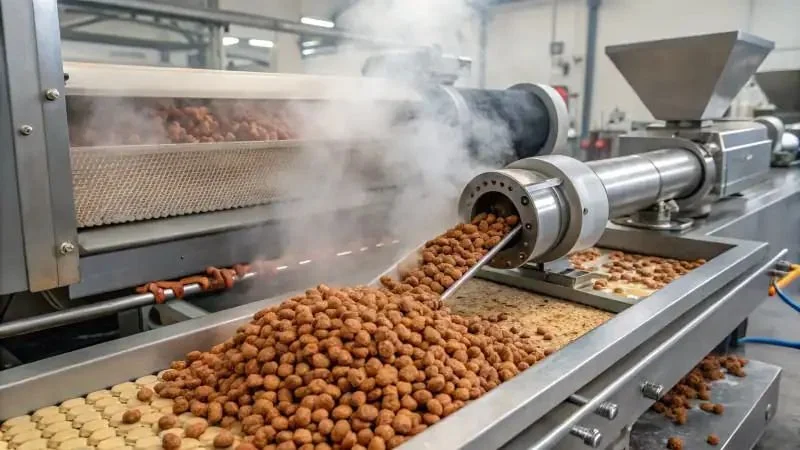
The other half of the problem is the industrial processes (extreme heat and pressure) that go into making kibble.
High heat damages protein. The Maillard reaction locks lysine into a form the body can't use. A nutrient panel measures total lysine, but your dog can only use reactive lysine.
Researchers analysed 67 commercial pet foods and found extruded dog food averaged 87% of its lysine in the usable form. Eight of the growth foods sat between 96 and 138% of the minimum requirement, meaning they only clear it if the usable lysine that's left is highly digestible. The same researchers concluded that ingredient choice mattered more than the type of processing, and pointed at rendered meat meals as the likely reason.
Which is another good reason not to feed rendered meats to your dog.
High heat doesn't only damage what's in the food, it creates things that shouldn't be there at all. Acrylamide forms above 120°C, and kibble processing runs hotter than that.
Researchers tested 51 dog foods and found acrylamide in every single dry sample, and calculated that a kibble fed dog takes in around four times more of it than an adult human does, relative to body weight. None of this shows up on the panel.
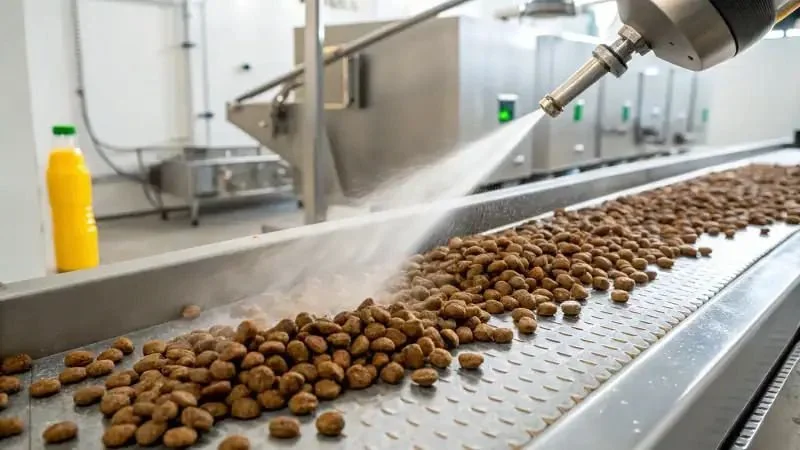
The fat has to be added back on afterwards. Extrusion is brutal on fat (and too much of it gums up the extruder) so the majority of the fat gets sprayed onto the outside of kibble pieces after cooking. So while fat attached to meat is at least partly protected from oxidation, fat sprayed on the surface is in direct contact with the air in the bag. Which is why kibble rapidly goes rancid from the outside in.
There is a "palatant" that also gets sprayed on, because dry food is not tasty without it. That's not just my opinion, it's stated plainly in a pet food industry patent application which also describes the coating process: 90kg of dried kibble, tumbled with 6kg of animal fat, then 3.5kg of liquid hydrolysed animal by-product.
Yum! 🤮
The fragile fats go first. EPA and DHA oxidise with heat, light and oxygen. In storage, commercial dog foods lost up to 13% of their EPA and DHA in premium brands and up to 50% in economy ones over twelve months.
Grain locks up minerals. Phytates in grain heavy formulations bind zinc in the gut so it passes straight through. The panel shows it's there but your dog can't use it.
All this means that comparing two nutrition panels really isn't comparing apples with apples.
The panel on a bag of kibble describes ingredients that have been rendered, extruded, dried, coated and then stored for months. The same numbers on minimally processed food describe nutrients that have been minced, frozen and fed within a short period. These are the same methods we use for our own food, and they leave nutrients in the form the body evolved to absorb.
Selenium is a clear example. A veterinary review compared how much of it was actually available for absorption across different diet types: 91% in raw food, 79% in pelleted, 58% in canned and 47% in steamed meat. The same mineral but with only half the availability.
The panels can be the same, but the actual absorbable nutrition is wildly different.
Kibble Nutrition Is Mostly Synthetic
Kibble ingredients take such a beating that they don't contain much nutrition by the time they reach the bag. So it gets added.
While the protein, fat and carbohydrate in kibble generally come from the ingredients, the majority of vitamins and minerals do not.
For example, researchers made the same canned pet food with and without the vitamin supplement and measured the difference. Thiamine came in at 51.3 mg/kg with it and 2.7 without. The cooking destroyed most of the thiamine the meat provided, so the supplement ended up supplying around 95% of what was left in the can. Not ideal.
And surprisingly, the ingredients' own contribution often isn't counted at all.
A paper on vitamin A in pet food manufacturing notes that the vitamin A naturally present in the ingredients is routinely overlooked, with synthetic retinyl acetate added to supply the entire requirement on top of it. The same study followed that synthetic vitamin A through the factory and found the finished food came out at 78% of target.
Manufacturers know this happens, so their solution is to deliberately overdose the mix going in. A feed industry publication puts the safety margins at 20 to 100 percent for vitamins A, D and E, and over 1,000 percent for some B vitamins.
The overdose is meant to cancel out the losses by the time your dog eats it. But the factory is the only part of the journey they control. Not the warehouse, the hot truck, or the six weeks the bag sat open in your laundry.
The number on the bag isn't a measurement of what your dog gets.
It's an estimate… and who knows how close it gets.
Just to be clear, I'm not arguing that synthetic vitamins don't work. Plenty of supplements are absorbed just fine, and used with care and purpose they fix real problems. My argument is that getting the majority of your dog's nutrition from synthetic sources is a long, looooong way from optimal.
Our raw food doesn't work that way. Our recipes are about 75% meat, organs and bone, and the nutrients come from the ingredients themselves. Fish, eggs and organs for vitamin D, kelp for iodine, heart and liver for copper. Which is why dogs do better on real food.
Nutrient Quality: Kibble vs Food
Two foods can list the same nutrient and deliver quite different things.
| Nutrient | Kibble | Food | What is the difference? |
|---|---|---|---|
| Zinc | Zinc oxide | Meat and organs | Zinc oxide is the least available of the common supplement forms. Meat delivers zinc already bound to amino acids, the form the gut absorbs directly |
| Selenium | Sodium selenite | Meat, fish and veg | Selenium from food arrives as selenomethionine, which is taken up by an active transport system and built into body protein. Selenite is less available so more ends up in the urine |
| Vitamin A | Synthetic retinyl acetate | Liver and organs | Liver delivers it with the fat and zinc needed to absorb and transport it |
| EPA and DHA | Flaxseed or plant oils | Fish | Dogs convert ALA into EPA poorly, and into DHA barely at all. Fish is the only meaningful source |
When Supplementation Goes Wrong
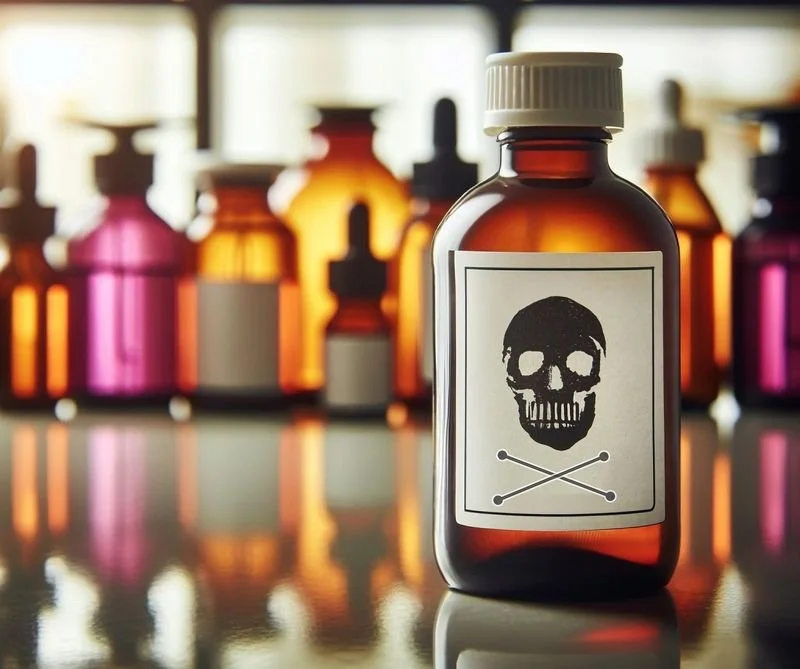
The other major issue with synthetic supplementation is quality control. Or a lack of it
In late 2018 the FDA started getting reports of dogs in kidney failure, linked to dry foods containing up to 70 times the intended amount of vitamin D. Weeks later Hill's (the premium brand vets recommend) recalled 86 lots across 33 varieties of canned food for the same reason. Some of it was Prescription Diet, the food vets prescribe to dogs that are already sick.
One bad batch of vitamin blend, which the FDA later found had never been tested.
That's the massive structural problem with synthetics. There is no limiting factor to stop over consumption.
Whole food doesn't work like that. The nutrition comes from everything in the bowl, and the amount is limited by how much a dog will actually eat. So while too much liver causes vitamin A toxicity, most dogs would never be able to eat enough liver to make themselves sick.
Again, none of which makes supplementation inherently bad. Used properly it's a targeted fix for a known problem.

Raw Doesn't Always Mean Better
Many vets will argue that most raw foods are deficient. And in many cases they are unfortunately correct.
A German study assessed 95 home prepared raw rations and found major imbalances in 60% of them, with a quarter supplying 70% or less of the vitamin A a dog needs. Calcium, zinc, copper, iodine and manganese are the most common gaps.
Raw isn't automatically better. And raw done poorly can be worse than kibble.
The reality is it takes a lot of work and knowledge to get right.
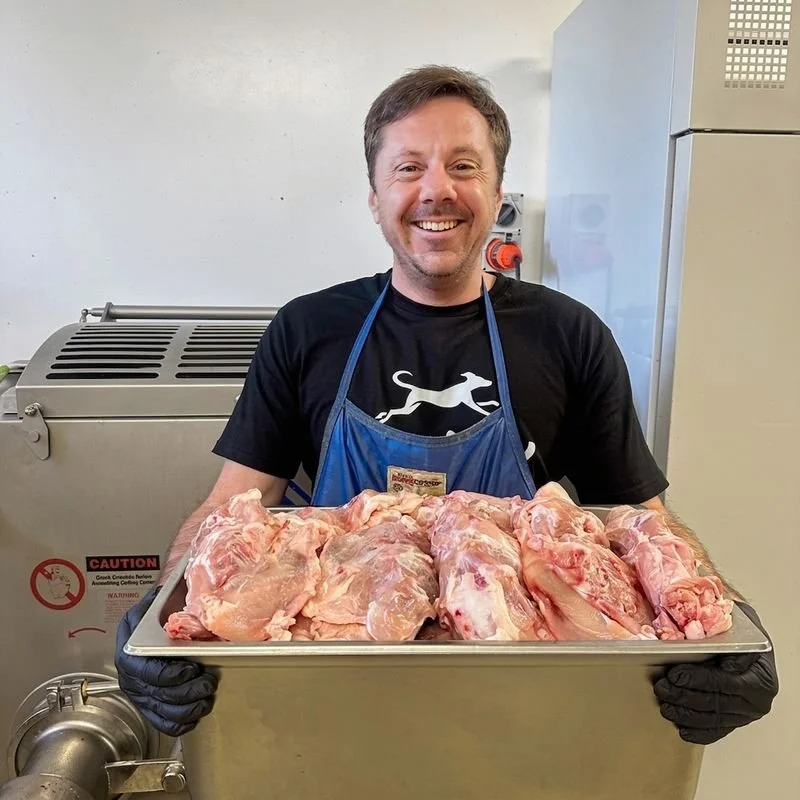
When we started Whoa Nelly! we did independent lab testing across our key ingredients like roo, fish, chicken and organs, rather than relying on published USDA averages. Every batch is formulated weekly using these lab tested values to meet AAFCO minimums and NRC recommended allowances.
This precision means we don't hope our food is formulated correctly. Because we tested our ingredients we are confident that our food contains everything your dog needs to thrive.
How To Spot A Supplement On A Label
Ingredients are listed by weight, so the synthetic vitamins and minerals sit right at the end of the list, usually in small print.
If you see these on an ingredient list I'd give it a miss:
"Vitamin supplement", "mineral premix", "vitamin and mineral mix" - the whole lot bundled into one line
Retinyl acetate or retinyl palmitate - synthetic vitamin A
Zinc oxide, ferrous sulphate, copper sulphate, manganese oxide - the mineral salts
Thiamine mononitrate, pyridoxine hydrochloride, folic acid - the B group
dl-alpha-tocopherol - synthetic vitamin E (natural is d-alpha, without the l)
Food Is Superior To Supplementation
A nutrient isn't just a nutrient. It turns up alongside the fats, minerals and co factors that make it work - plus a long list of compounds that haven't been named yet or potentially even understood.
Researchers have documented more than 139,000 chemicals in food so far. The USDA tracks 188 of them. A vitamin supplement contains only what's on that list, because nothing else was asked for. Taurine is a good example of the problem - it isn't even classed as essential for dogs, since a healthy dog makes its own, and yet dogs still develop heart disease when they run short of it. The list missed something that matters, and nobody knows what else is on it.
To assume we have nature 100% figured out, when we know we don't, is unbelievably arrogant. Why would we use this faulty reductionist approach when it comes to caring for our dogs? Apart from increasing profit margins, anyway.
So look at the ingredients, then look at that list at the end. If a food meets the standard without any synthetic vitamins, you've found a genuinely high quality food.
And of course if you'd rather leave it to us, our raw dog food is amazing ❤️